Healthcare facilities are the most complex buildings humans design.
A hospital room isn't just a room. It's a system of competing requirements — patient comfort, staff efficiency, infection control, medical gas delivery, emergency egress, ADA accessibility, seismic resilience — all governed by some of the strictest building codes in existence (OSHPD/HCAi).
My job was to hold all of these constraints in my head simultaneously and produce a design that satisfies every one of them while still feeling like a place where humans can heal.
"Architecture is the original user experience design. The difference is that your 'users' are patients in pain, nurses on 12-hour shifts, and surgeons who need everything within arm's reach."
Job Captain: the person who turns design intent into buildable reality.
Taylor Design (2020–2025): Healthcare facility planning and design at a firm specializing in healthcare architecture. Led design reviews from ideation to implementation. Managed OSHPD Construction Administration — handling day-to-day construction changes, field conditions, and revisions to approved drawings. Coordinated engineers' work for ACDs (change orders), RFIs, and submittals. Also served as Social Event Planning Director for the LA office — organizing and coordinating team culture across the firm.
Huitt-Zollars (2018–2020): Developed designs based on clients' and users' needs with stringent OSHPD requirements for Acute Healthcare Facilities. Managed projects from submission to approval. Traveled for site visits to understand scope, measurements, and site-specific issues. Experienced in the submittal process for both OSHPD and city jurisdictions.
"Similar to UX, the design is driven by understanding user feedback, intuitive layouts, scope and budget."
As Architectural Job Captain, I owned the translation layer between concept and construction:
- Leading design iterations through quick wireframe studies for facility planning — testing patient flow, staff circulation, and spatial efficiency before committing to construction documents
- Running user research through client meetings, site visits, and stakeholder interviews to understand the specific needs of each facility's patients, staff, and administrators
- Coordinating cross-functional teams — mechanical, electrical, and plumbing engineers, consultants, contractors, and construction managers — adapting to ongoing changes while maintaining design consistency
- Managing OSHPD Construction Administration — navigating complex healthcare agency criteria from submission through construction and agency-related close-out
- Responding to field conditions in real time — RFIs, change orders (ACDs), construction changes, and revisions to approved drawings
Design Thinking in Architecture
Arranging user meetings to ask key questions. Producing layouts that are practical for user workflow, align with hospital standards, and meet healthcare code requirements (CBC).
Iterative Design
Creating quick wireframe studies with multiple options for each space. Presenting to clients for feedback. Iterating until the design solves every constraint.
Cross-Disciplinary Coordination
Coordinating with mechanical, electrical, plumbing engineers and managing change orders. Ensuring design intent survives the build process.
Regulatory Navigation
OSHPD/HCAi has some of the strictest approval processes in construction. Managing submittals, plan checks, and agency reviews from start to finish.
Every healthcare project follows the same UX process — just at building scale.
The parallel between architectural design and digital UX isn't a metaphor. It's the same discipline applied to different media:
Research → Site Visits
Traveling on-site to understand existing conditions, measurements, and user pain points. Surveying old record drawings.
Wireframes → Schematic Design
Quick spatial studies testing different configurations. Multiple options presented to stakeholders for feedback before committing.
Prototyping → Design Development
Detailed 3D models and renderings. Resolving conflicts between disciplines. Client-specific material selections.
Handoff → Construction Documents
Final drawings for construction. Every dimension, material, and detail specified. Then supporting contractors through build.
"In architecture, you can't A/B test a building. You have to get it right the first time. That discipline — research deeply, prototype thoroughly, document everything — is what I bring to digital design."
Four decisions that shaped how I think about user experience.
Patient Flow Optimization
In a healthcare facility, "user flow" is literal. Patients, staff, visitors, supplies, and waste each need separate circulation paths that never cross-contaminate. I mapped these flows the same way a UX designer maps user journeys — identifying bottlenecks, reducing unnecessary steps, and ensuring wayfinding is intuitive even under stress.
Contamination Prevention Zoning
Cross-contamination prevention isn't just about hand sanitizer. It's an architectural problem — how air flows between zones, where clean and soiled utility rooms are placed relative to patient rooms, how materials transition between sterile and non-sterile areas. Every spatial decision has infection control implications.
Accessibility Beyond Code Minimums
ADA compliance is a floor, not a ceiling. Healthcare patients are often in their most physically vulnerable state. I designed for the wheelchair user who also has an IV pole. The visitor who is emotionally overwhelmed and can't read signage. The nurse who needs to move a bed through a doorway at 3 AM without waking adjacent patients.
Balancing Client Vision with Regulatory Reality
Clients want beautiful spaces. Agencies want compliant ones. The job captain's role is to find the design that does both — presenting options that satisfy the client's vision while navigating the regulatory constraints they may not know exist.
The full architectural technology stack.
Healthcare architecture requires fluency across BIM software, construction management platforms, and visualization tools. In January 2025, I completed both Autodesk Revit Core Certification (Jan 20) and Intermediate Certification (Jan 28) at Taylor Design.
Selected Healthcare Projects at CHLA
Presentation slides, 3D renders, and construction documentation produced for Children's Hospital Los Angeles. These materials were used to communicate design intent, gain stakeholder approval, and coordinate construction.
CHLA ACCIS — Cardiac Imaging Suite
Interior design revisions for the Advanced Cardiovascular and Catheterization Imaging Suite. Coordinated wall graphics, material finishes, and nurse station design through construction.
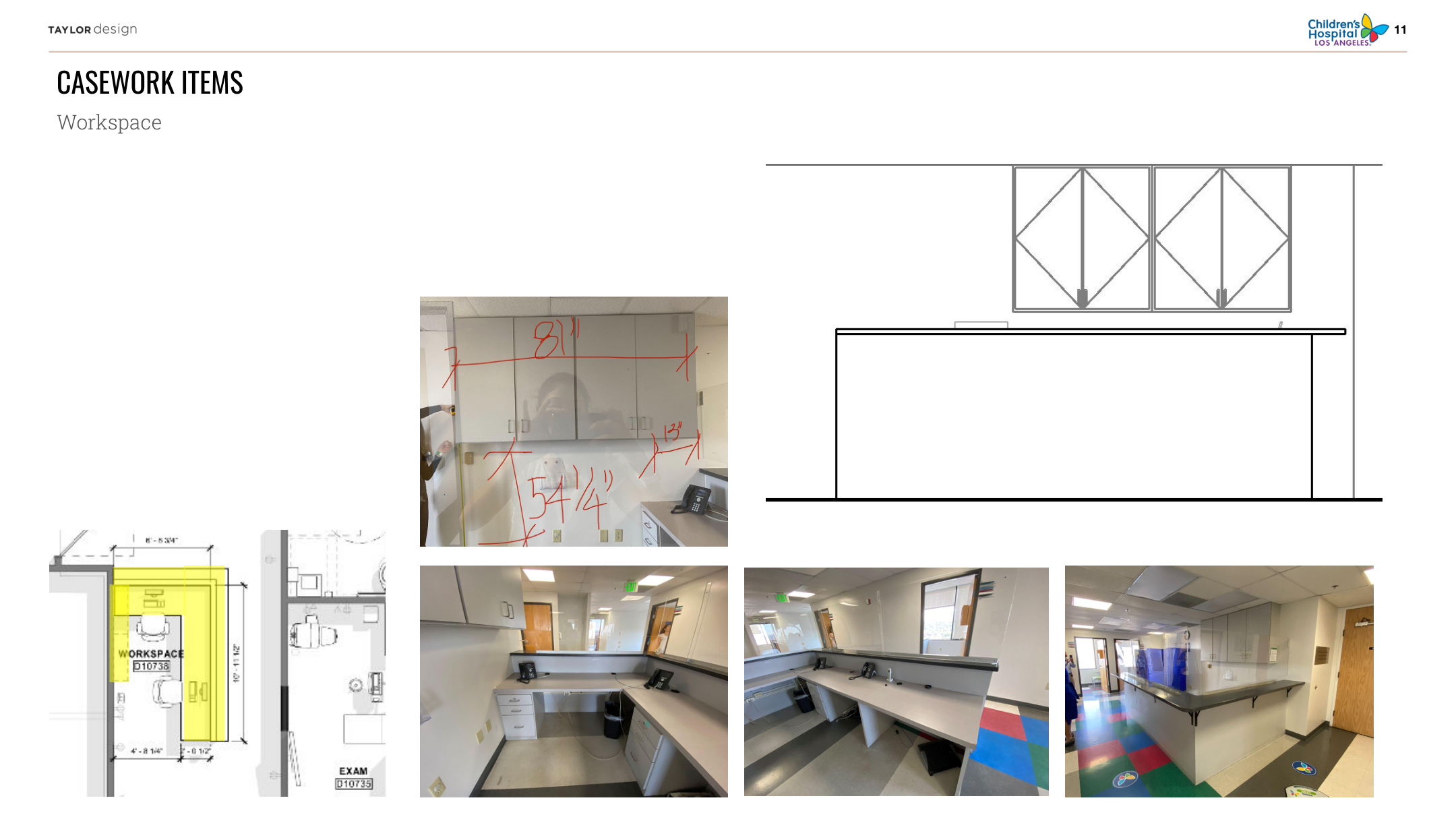
Workspace casework — elevation drawing with dimensions, plan callout, and construction verification photos
CHLA ACCIS — MRI Wall Graphics
Designed wall graphic options for the MRI imaging rooms — bringing warmth and character to clinical spaces while keeping cost and constructability in mind.
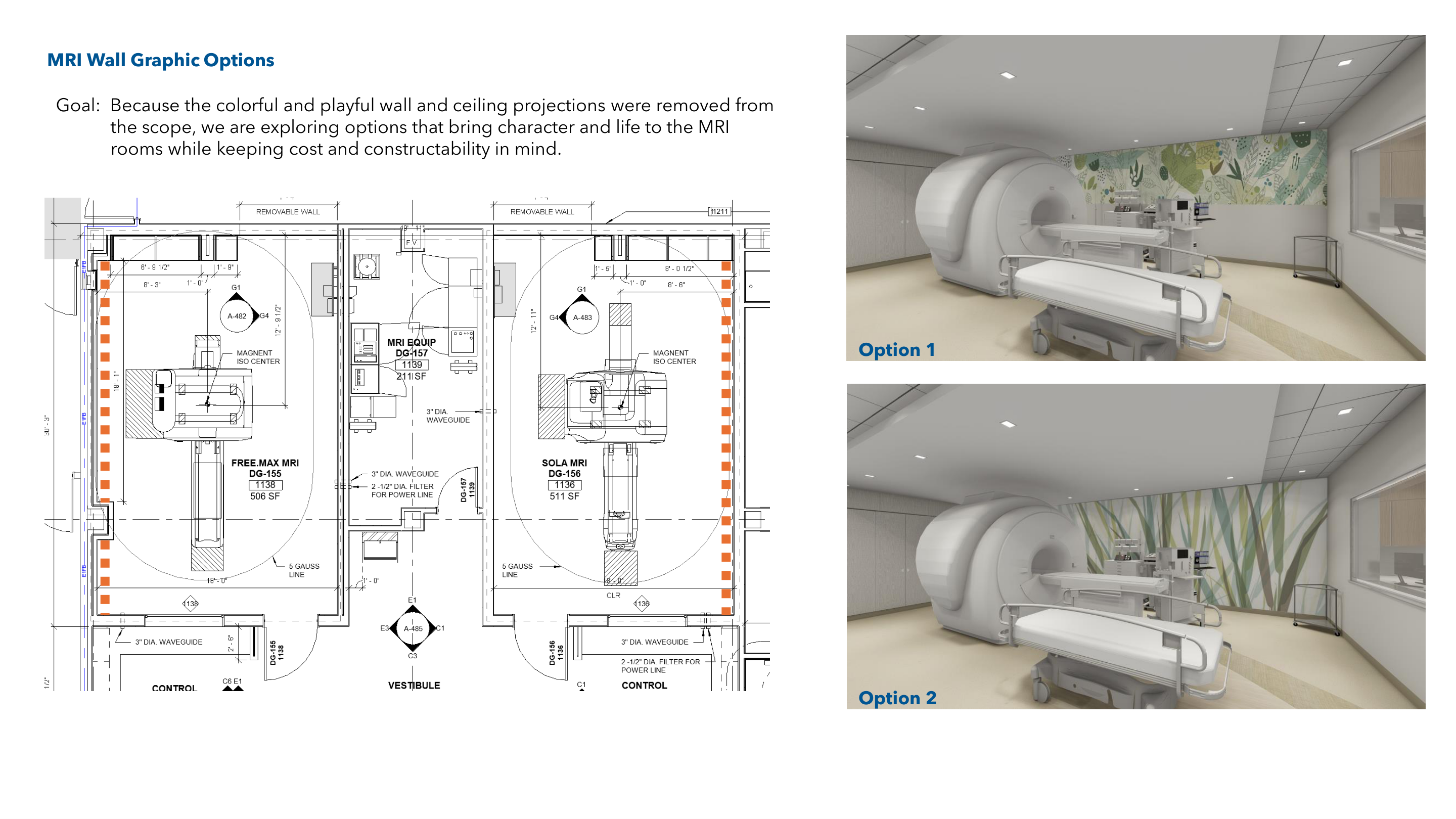
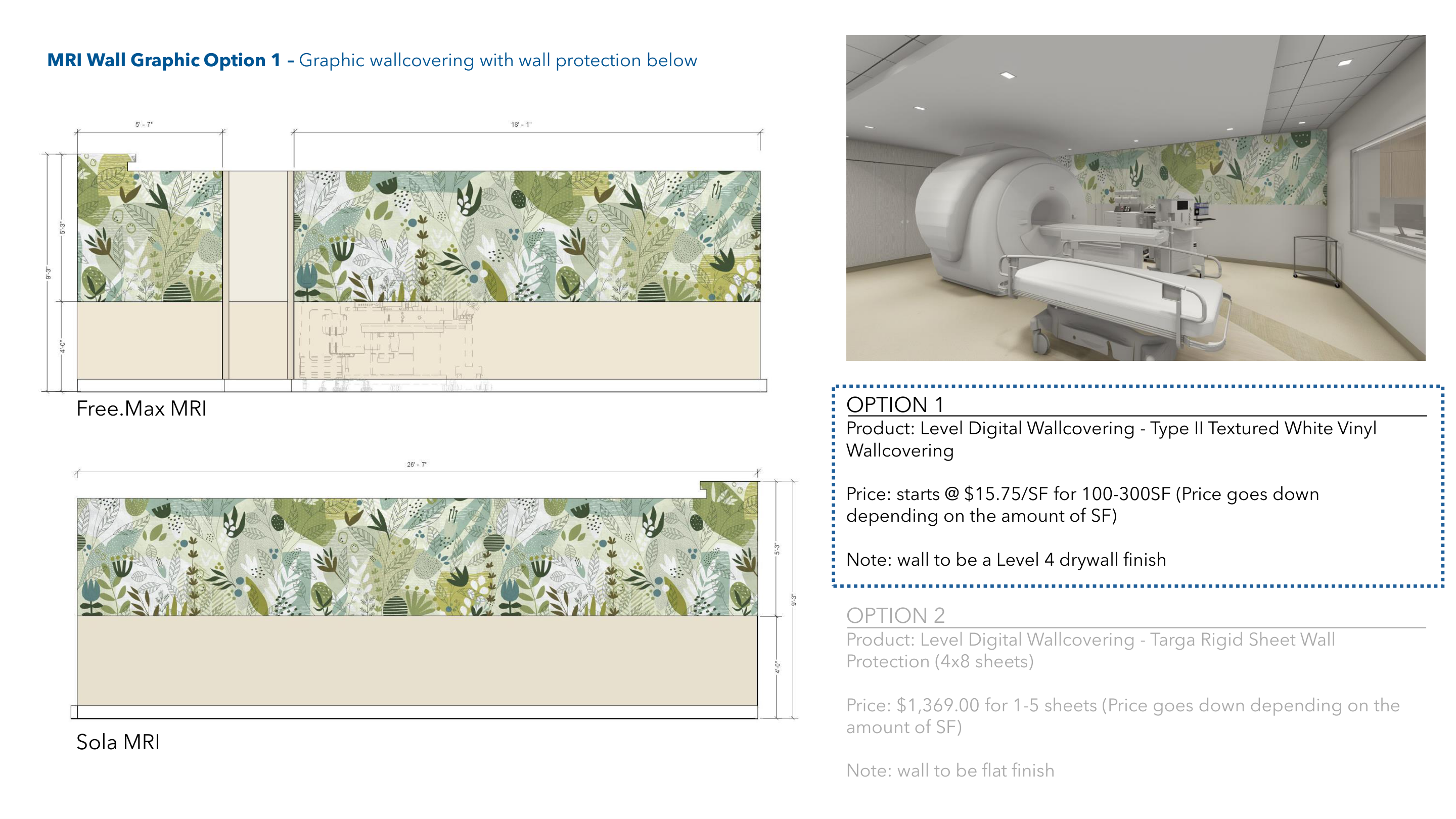
MRI room wall graphic options — elevation drawings, 3D renders, product specifications, and cost analysis
CHLA Fetal Diagnostic Clinic Remodel
Clinic remodel at Hollywood Presbyterian, 10th Floor. Managed casework design, reception counter documentation, and construction coordination from schematic design through punch walk.
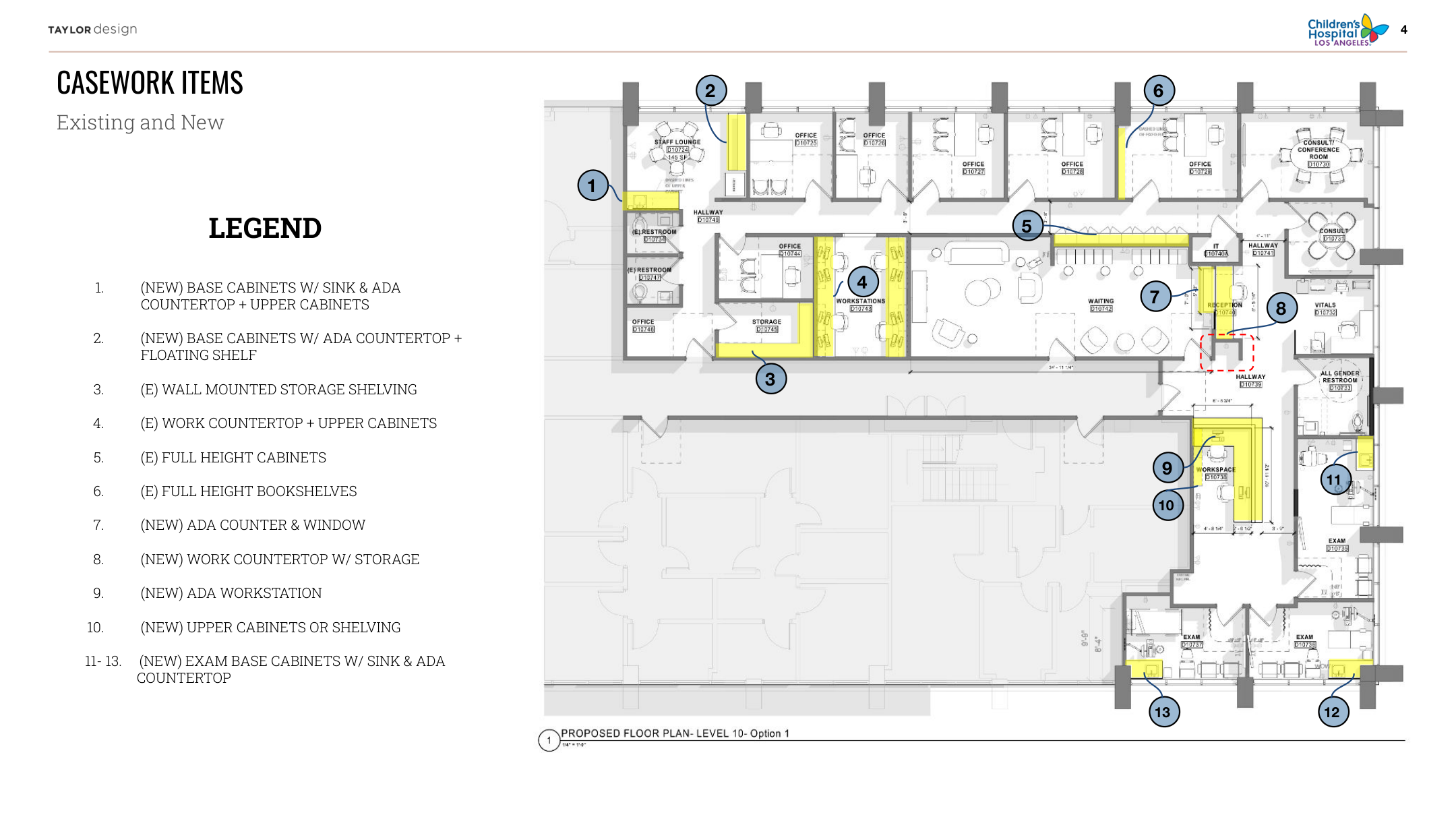
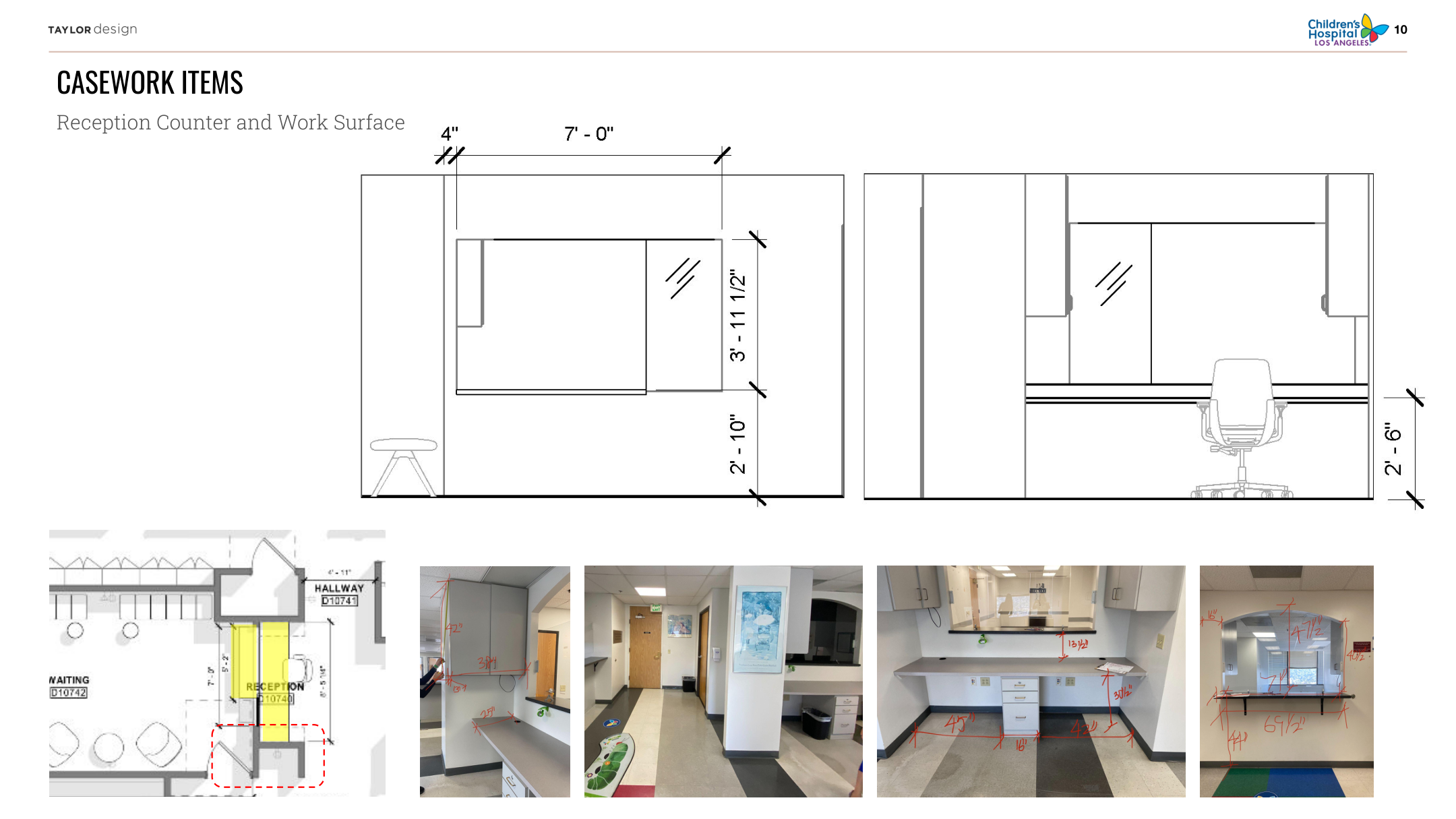
Casework coordination and reception counter — from drawing to installed result
CHLA Fetal Diagnostic — Casework Elevations
Elevation drawings documenting casework design for exam rooms and workspaces — with dimensions, plan callouts, and construction verification photos showing the built result.
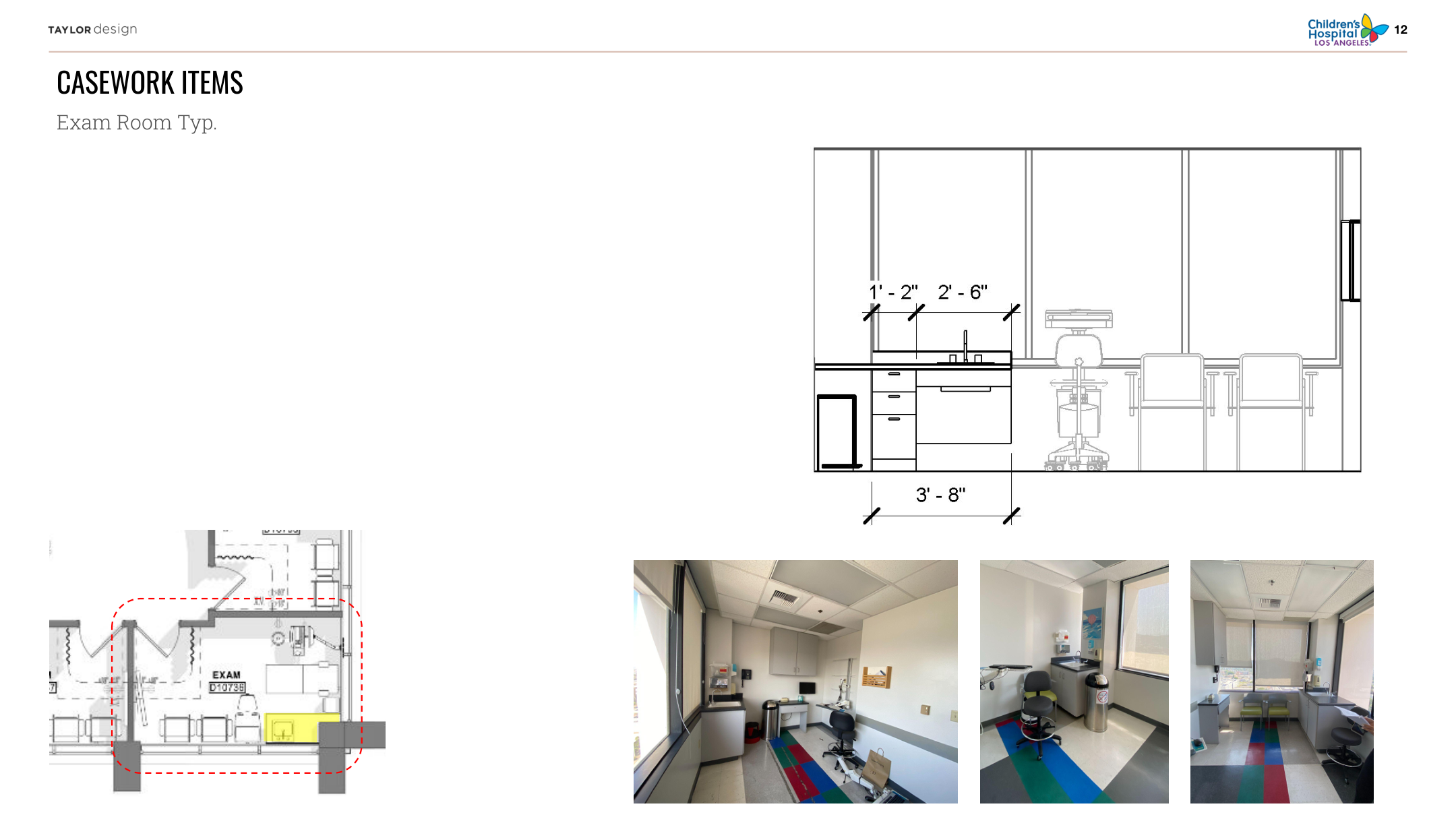
Exam Room casework elevation — drawing to built result with dimensioned cabinet layout
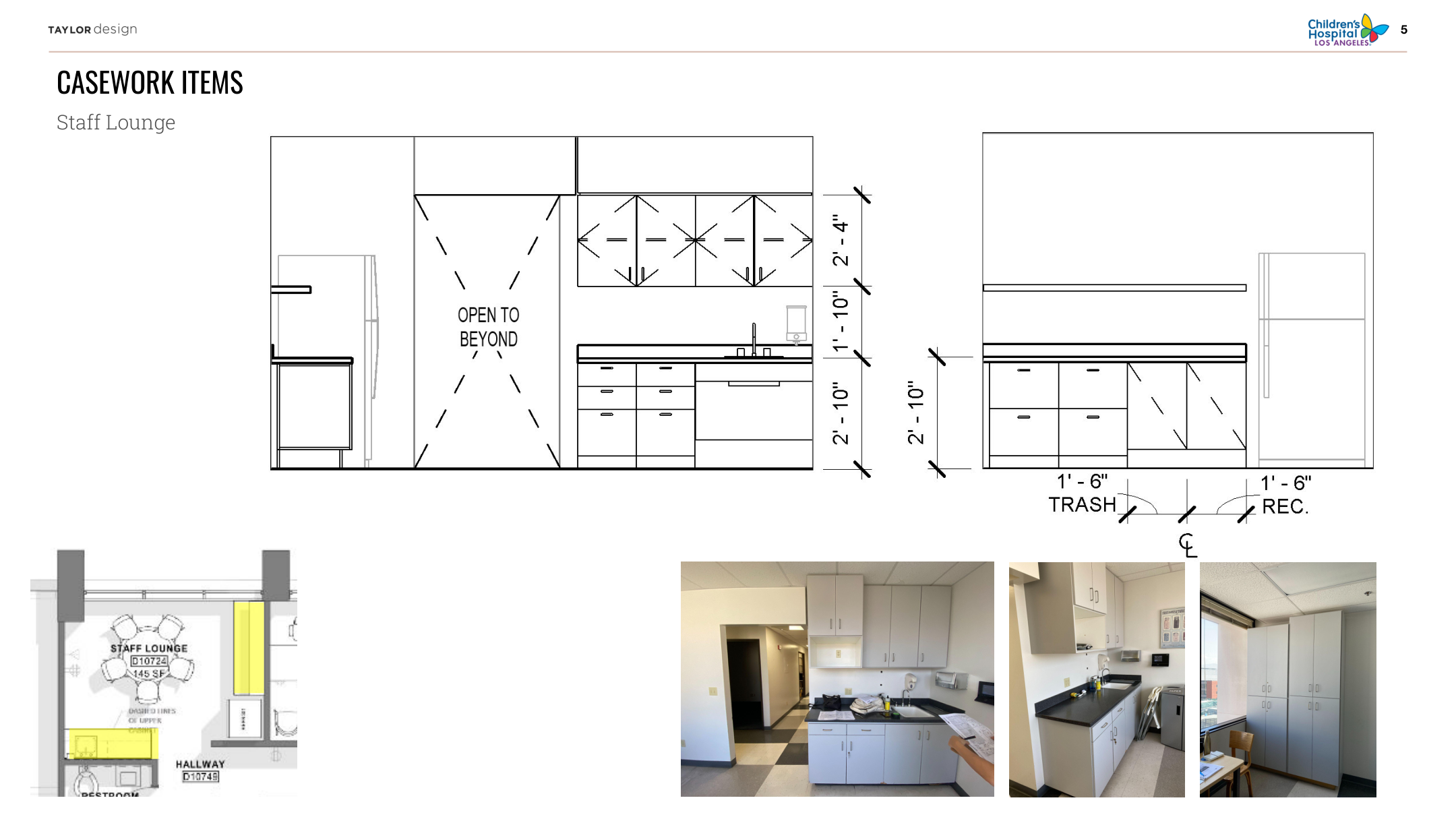
Staff Lounge casework elevation — kitchen layout from drawing through construction
Revit — "The Taylor Design Way"
Completed both the Core and Intermediate Revit certification programs at Taylor Design, earning recognition from the Director of Technology.
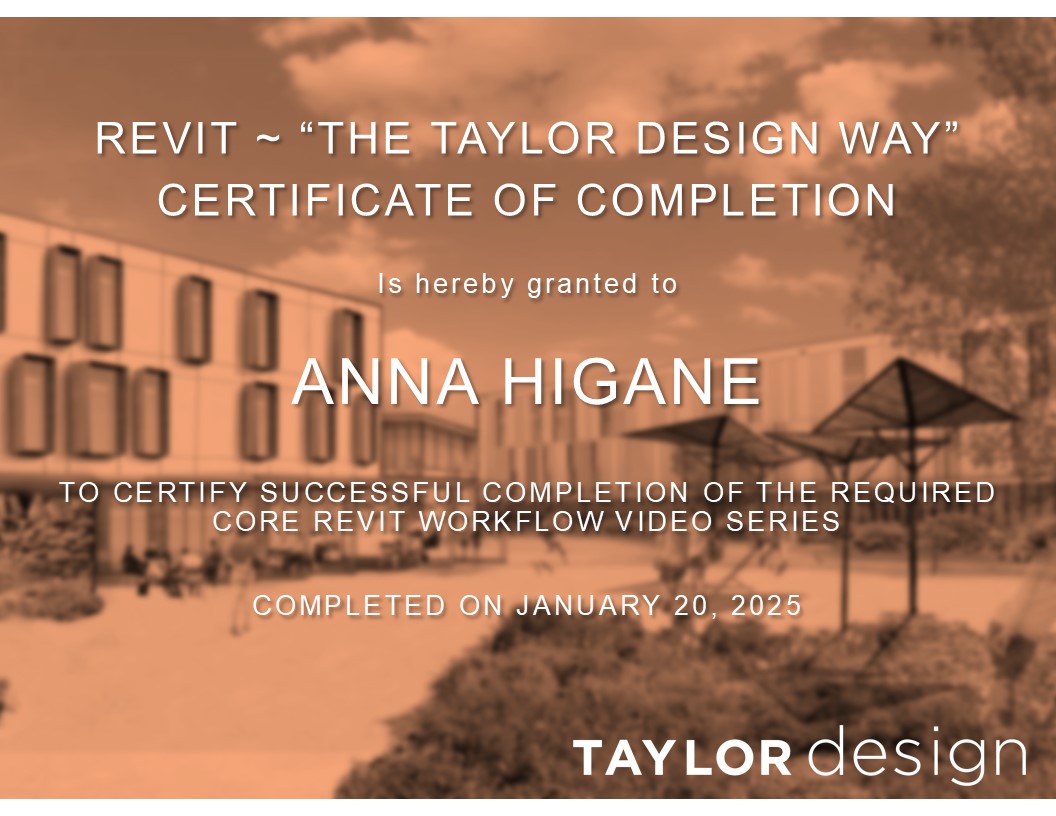
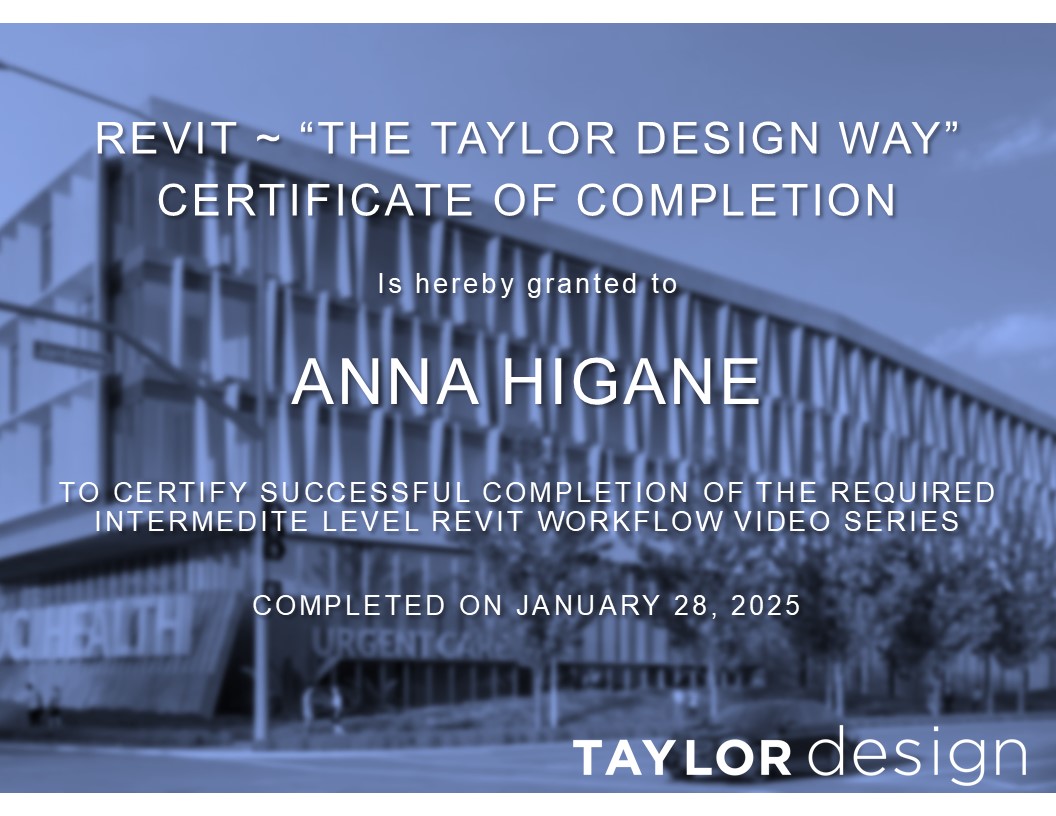
Core Certification (Jan 20, 2025) & Intermediate Certification (Jan 28, 2025) — completed 8 days apart. Terminated 6 days after intermediate certification.
How architecture made me a better UX designer.
Seven years of healthcare architecture taught me things that no UX bootcamp can:
- Constraints aren't limitations — they're design parameters. The tightest regulatory environment I've worked in produced my most creative solutions.
- Real user research means site visits, not just surveys. You understand a nurse's workflow by watching her work a 12-hour shift, not by asking her to fill out a form.
- Cross-functional coordination is the actual job. Design is 20% of the work. Getting engineers, contractors, clients, and agencies aligned is the other 80%.
- You can't ship a broken building. The stakes of "getting it wrong" in architecture are physical. That discipline — measure twice, cut once — makes me a more careful, more thorough digital designer.
- Every design decision has downstream consequences. Moving a wall 6 inches affects plumbing, electrical, HVAC, and code compliance. I think in systems, not screens.
"I don't just design interfaces. I design experiences informed by 7 years of designing the most complex buildings humans build. That perspective is rare in UX — and it's my greatest advantage."